
Early in my yoga teacher training, my mentor Mark Freeth used to remind us:
“You can’t force alignment you can only breathe your way into it.”
At the time, I didn’t fully grasp what he meant. Coming from a background in Sport Science and functional fitness, I thought alignment was all about posture and biomechanics. But over time, I learned that it’s breath that teaches the body where it’s safe to move and how far.
The Breath Sets the Rhythm
In both yoga and athletic training, breath is the constant that informs everything else. It stabilises the spine, regulates tension, and calibrates movement.
When the breath shortens or becomes strained, it’s a signal the body is out of alignment or overloaded. By contrast, when the breath flows easily through transitions, the nervous system recognises safety, and true alignment emerges naturally.
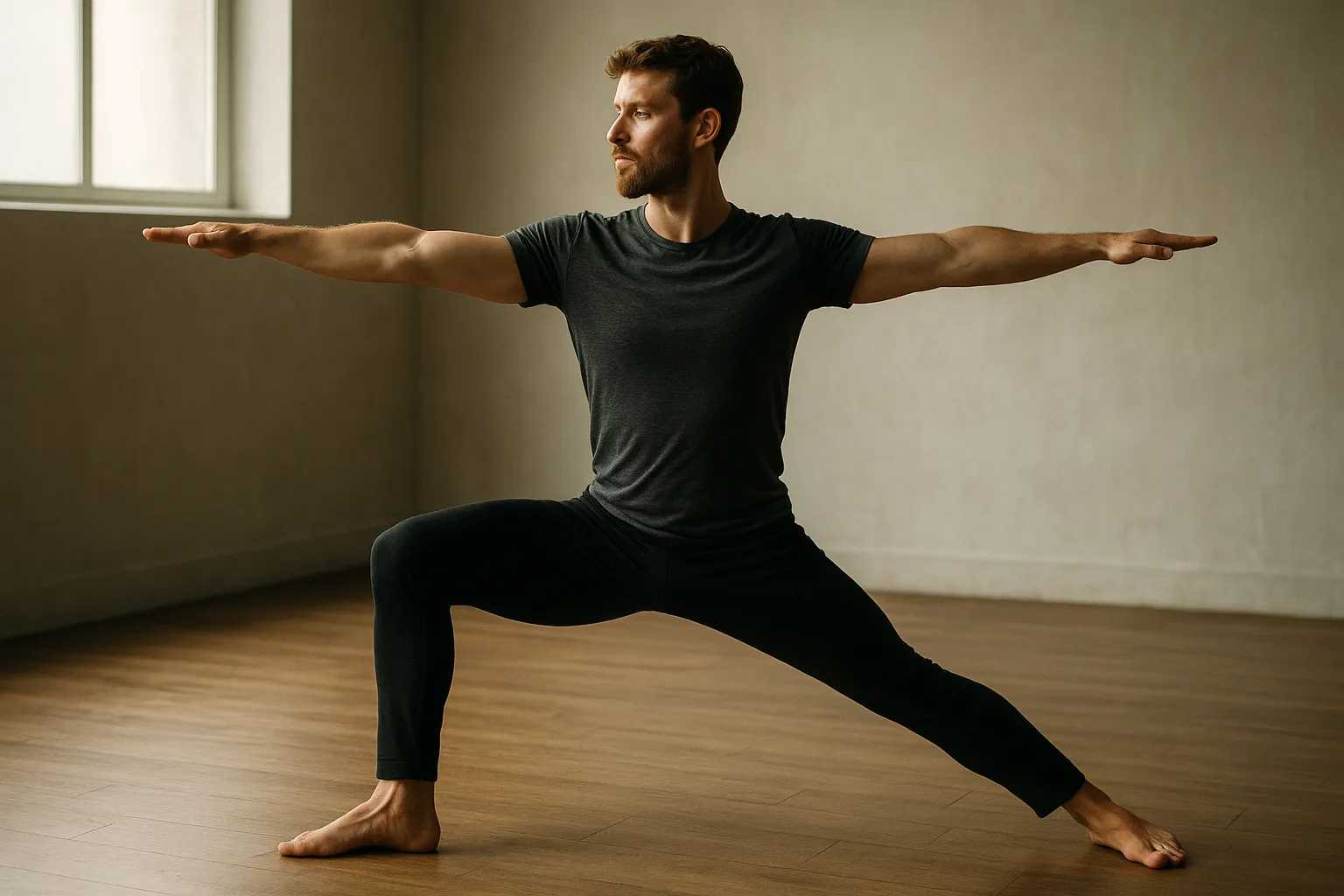
In functional movement, this might look like maintaining diaphragmatic breathing through a deep squat or rotational lunge. In yoga, it’s the same maintaining calm control in a Warrior II or Revolved Triangle means your body is moving with the breath, not against it.
Alignment Is More Than Angles
Alignment isn’t about forcing symmetry or creating perfect lines; it’s about organising intention.
Every posture whether on a yoga mat or under a barbell expresses how the body manages load, tension, and flow.
When you focus on internal awareness rather than external appearance, you begin to align from the inside out. The pelvis, spine, and ribcage become architectural anchors for the breath to move freely.
Functional yoga teaches that breathing creates the posture, not the other way around.
Integration in Practice
Try this short practice:
- Stand tall in Mountain Pose.
- Inhale to lengthen your spine upward.
- Exhale and feel your feet root into the floor.
- Continue this pattern through slow, deliberate movements perhaps stepping into Warrior I or lowering into a Lunge.
Every movement should feel connected not choreographed, but alive through breath.
This awareness carries over into daily life, from cycling posture to sitting at a desk. Breath and alignment aren’t limited to yoga they define how we move through the world.
Breath as the Bridge
When I work with athletes particularly those training for HYROX or endurance cycling the biggest difference isn’t in muscle recruitment, it’s in breath awareness. A properly aligned thoracic spine allows the diaphragm to move freely, improving endurance and control under stress.
Functional yoga helps build this bridge: efficient breathing underpins efficient movement.
“If you can control the breath, you can control the outcome.”
— Richard Branson, Functionalyoga.uk
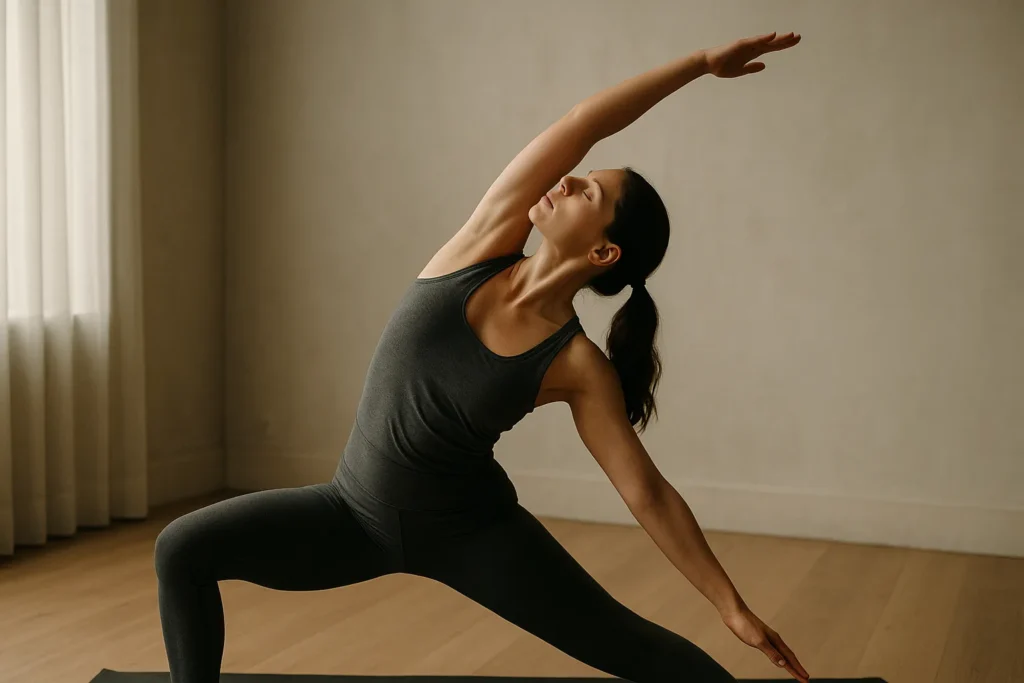
Yoga practitioner mid-transition from Warrior II to Reverse Warrior, calm focus, breath visible through soft lighting and muscle engagement. Minimalist natural-light studio, cinematic 16:9.
Internal Links:
External Links: