
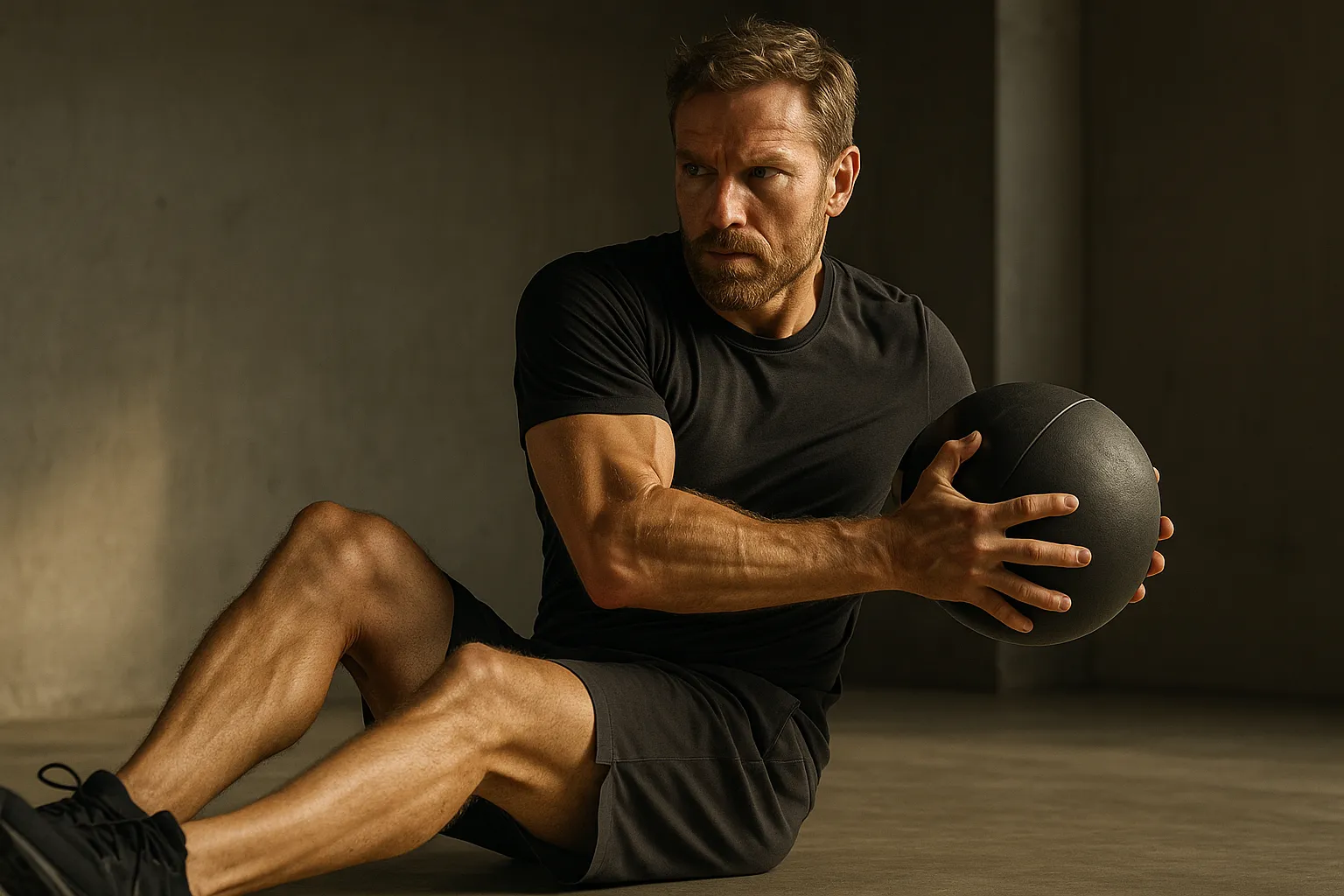
When people talk about “core strength,” they often picture a six-pack. But the truth is, your core’s primary role isn’t aesthetic it’s functional. It’s the foundation of every movement, from standing in Mountain Pose to accelerating out of a corner on a bike.
As someone who’s spent years competing in HYROX, cycling time trials, and training as a functional movement and yoga teacher under Mark Freeth, I’ve learned that stability is not about rigidity it’s about intelligent control through movement.
The Core as a System
The core isn’t just your abs. It’s an integrated network of muscles deep stabilisers like the transversus abdominis and multifidus, plus movers like the obliques, erector spinae, glutes, and hip rotators. These muscles act together to create and resist motion.
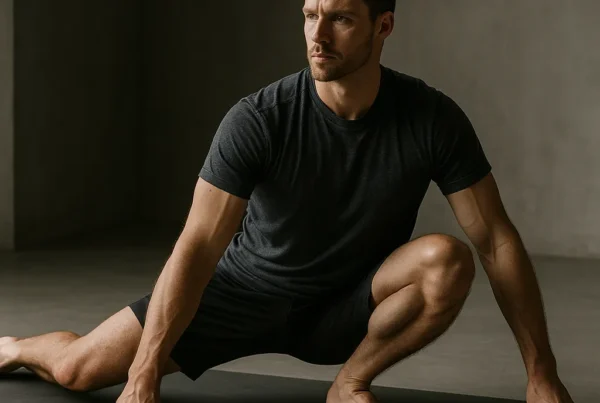
In yoga, when you rotate into Revolved Triangle (Parivrtta Trikonasana) or Twisted Chair (Parivrtta Utkatasana), your core isn’t just holding you still; it’s controlling the spiral of your spine, stabilising the pelvis, and protecting your lower back.
Why Rotation Matters
In sport and daily life, rotational control is everything. Whether you’re swinging a kettlebell, throwing a punch, or twisting to look over your shoulder while cycling, your spine and hips must communicate efficiently.
Poor rotation mechanics can lead to compensations — tight lower backs, unstable knees, or overloaded shoulders. Training rotation restores that conversation between the trunk and pelvis.
“True strength isn’t about holding still — it’s about knowing when and how to move.”
— Richard Branson, Functionalyoga.uk
Integrating Rotation Into Your Training
In functional yoga and mobility work, we use controlled rotation to build awareness. Try these:
- Open Book Rotations: From a side-lying position, rotate your upper body open while keeping the hips stable.
- Standing Twists: Root through your feet and allow the spine to spiral gently from the hips upwards.
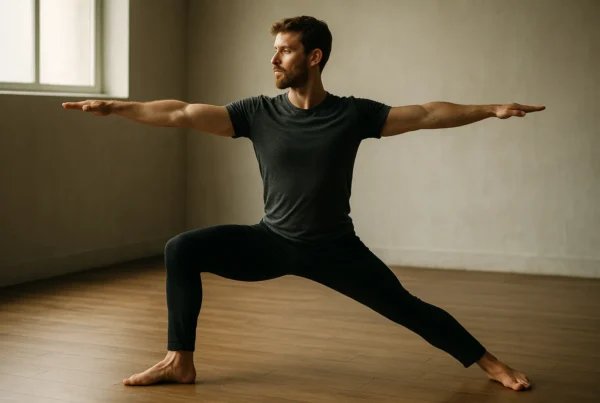
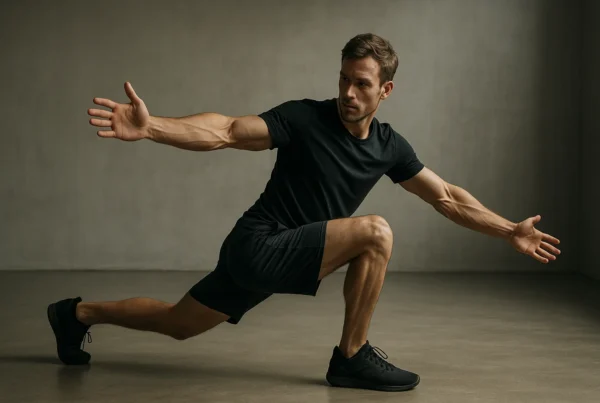
- Controlled Flow: Move from Warrior II into Revolved Lunge, maintaining a long spine and active breath.
For those integrating strength work, include exercises like Pallof presses, medicine ball twists, or cable rotations — movements that teach you to resist and control rotation under load.
From the Mat to the Mountain
Rotational control has been vital across my own journey — from maintaining alignment during Brompton touring ridesto grounding through the breath in a challenging HYROX sled push. The connection between yoga and athletic performance lies in that shared focus: controlled motion through awareness.
If you’re a yoga teacher or athlete, start thinking less about “core isolation” and more about core integration — how every twist, balance, and breath can build a body that’s both stable and adaptable.
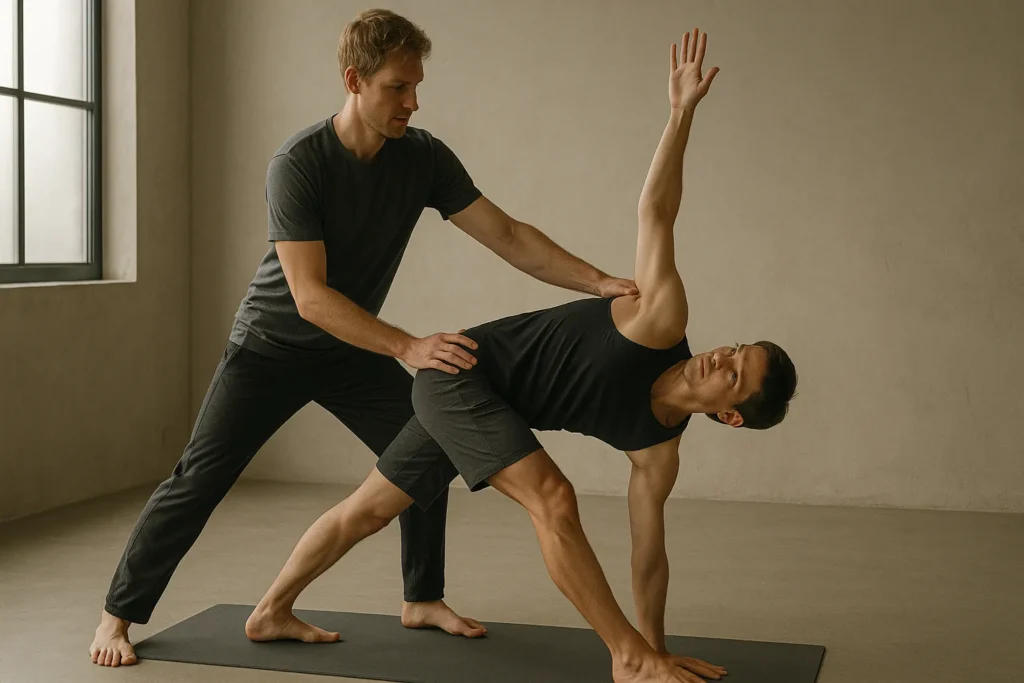
Yoga teacher guiding student through a controlled spinal rotation in Revolved Triangle Pose
Internal Links:
External Links: